
Member Spotlight: SINTEF
This month, we are proud to announce SINTEF as our member spotlight feature! SINTEF is one of Northern Europe’s largest independent research organizations, with around 2,000 employees working across a wide range of fields from energy and maritime technologies to health, materials, and digital systems.
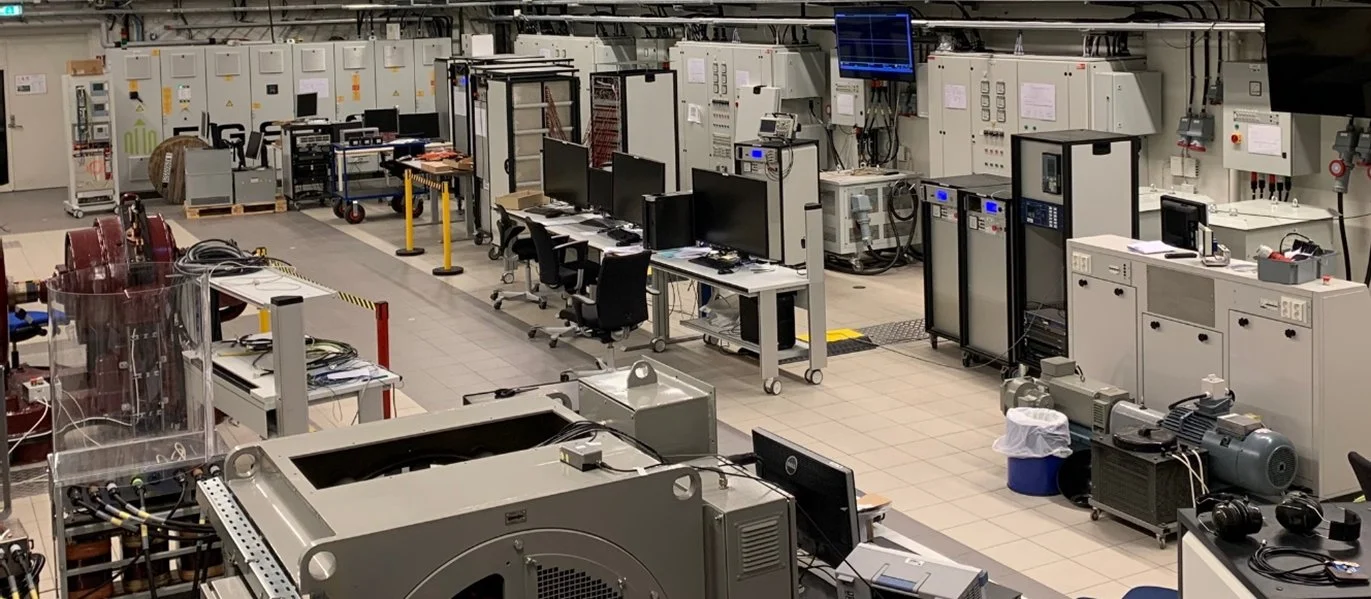
Photo credit - SINTEF
Established in 1950, it was founded to bridge academic science and industrial application, and today it remains a non-profit foundation reinvesting contract research revenues into laboratories, talent, and knowledge.
Headquartered in Trondheim and closely linked with the Norwegian University of Science and Technology (NTNU), SINTEF focuses on knowledge and applied research rather than product development. Its role as a knowledge hub makes it a trusted partner for shipowners, energy providers, and regulators seeking solutions for maritime electrification and green shipping.
Pioneering Marine Electrification & Battery Research
SINTEF has been at the forefront of maritime battery innovation for decades, contributing to projects that have helped shape the future of green shipping. Already in the 1990’s, SINTEF studied the possibility for introducing purely battery-electric propulsion in ferries. Among its other early achievements was the design of a MW-scale inductive charging system for Wärtsilä, which was successfully demonstrated with a 1.2 MW installation for the Norwegian car-ferry MS Folgefonn proving the feasibility of high-capacity charging without direct physical connections.
The organization was also involved in some of the earliest trials of ship battery installations, laying the groundwork for operators to adopt batteries with confidence. Building on this foundation, SINTEF recently played a central role in the SEABAT EU project, which explored modular battery systems with integrated modular power converters designed for flexibility and scalability, and are now participating in the eWave EU project, focused on developing high-voltage batteries with integrated converters.
In addition, SINTEF is now finalizing a feasibility study for Hurtigruten Norway, evaluating large-scale electrification options for one of the country’s most iconic coastal passenger routes. Together, these projects highlight SINTEF’s ability to connect cutting-edge research with practical applications, driving innovation from concept to deployment across the maritime sector.
Challenges in Marine Electrification
Despite this momentum, SINTEF is clear-eyed about the hurdles the industry faces. The cost of batteries remains significant, and weight and volume constraints make them less viable for long-distance or very large vessels. Charging infrastructure presents another challenge: ports often face space restrictions, low utilization rates for charger installation, and high installation costs. Global variations in electricity prices and emissions factors complicate the environmental benefits of shore charging, while a lack of standardization in charging systems hinders interoperability.
Coordinating charging schedules for fleets is also complex, particularly where multiple vessels compete for limited port charging capacity. These factors combine to make hybridization - batteries paired with other fuels such as hydrogen or ammonia, the most realistic pathway for lower emissions for many vessel types.
Future of Maritime Batteries
Despite these challenges, SINTEF expects steady advancement in maritime battery solutions. Growth is expected to continue, especially for smaller vessels, ferries, fishing boats, and aquaculture support vessels, where operating profiles align well with battery performance and charging logistics. Pure battery propulsion is already viable for scheduled short sea routes with predictable port calls, while hybrid systems are expected to become standard on more ships. For longer routes, batteries will increasingly be combined with other green fuels to optimize efficiency and reduce emissions.
Rapid innovation cycles in battery cell technology, modularity, and power electronics are expanding the potential of maritime batteries, and SINTEF’s role in piloting, testing, and evaluating these technologies ensures that industry adoption is based on rigorous science.
Looking Ahead
With its global reputation for multidisciplinary expertise and its strong track record in marine battery research, SINTEF is uniquely placed to drive the maritime transition forward. Its work on wireless charging, modular systems, and integrated high-voltage batteries demonstrates not only technical leadership but also the ability to connect research to real-world implementation.
We are proud to spotlight SINTEF this month, recognizing its vital role in bridging knowledge, industry, and innovation to make maritime electrification a reality.
About the Maritime Battery Forum
The Maritime Battery Forum was founded with the aim of promoting new and efficient energy storage technologies in the maritime industry. With over 90 members across 3 continents, the MBF works to disseminate information, facilitate discussion, and accelerate the journey towards a zero-emission maritime future.
Contact :
Ayomide Miracle Salifu
Community & Communications Manager
Email: ayomidesalifu@maritimebatteryforum.com
Website: www.maritimebatteryforum.com
